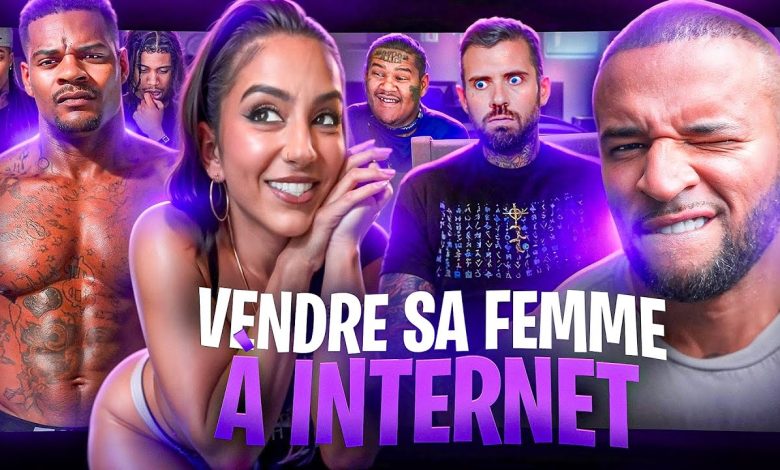
Adam22 first became known in the BMX world before building No Jumper, a podcast that became closely associated with emerging rap and hip-hop. However, his move toward increasingly provocative content, particularly content connected to the adult industry, has profoundly changed his public image. Beyond this individual case, his trajectory raises a central question for creators: what remains of a brand when attention becomes the primary goal?
The pursuit of visibility can accelerate a career. But when it relies mainly on transgression, it also creates a particularly unstable dynamic: audiences become accustomed to it, shock loses its impact, and it becomes necessary to keep going further to generate the same reactions.
From BMX beginnings to the rise of No Jumper
Originally, Adam22 operated in the BMX world and ran a store associated with that scene. To support that business, he began publishing content focused on BMX culture before developing No Jumper as a podcast.
The program gradually moved away from BMX as rappers from his circle began appearing on it. Conversations about hip-hop found an audience, especially because they gave space to lesser-known artists. No Jumper then gained a reputation as a platform able to spotlight emerging talent while later welcoming more established figures.
This evolution allowed the podcast to become a major reference point in its field. Its identity was relatively clear at the time: a space for discussions, interviews, and discoveries centered on rap. That consistency was precisely what contributed to its growth.
The shift toward adult content
Beginning in 2022, No Jumper’s editorial direction reportedly gave increasing prominence to OnlyFans models and adult film actresses. A paid version of the program was also associated with more explicit formats.
At the same time, Adam22 and Lena the Plug launched Plug Talk, a show distributed on private platforms. The concept combined interviews and adult content with female guests. This activity was no longer simply a diversification of formats: it directly altered public perceptions of the couple and, by extension, of Adam22 among the audience that followed him for his work in hip-hop.
This type of change can attract a new audience, but it can also alienate the original one. When a public figure is known for expertise, a cultural scene, or an ability to discover talent, a shift toward content built on sexualization and controversy can blur the editorial proposition.
Shock as the main driver of visibility
The most widely discussed moment in this evolution was the announcement, followed by the release, of a scene involving Lena the Plug and actor Jason Love, without Adam22. The sequence prompted numerous reactions on social media, often hostile or mocking toward Adam22.
He then appeared to publicly play into the image assigned to him by his detractors. Posts, appearances, and statements sustained that narrative to the point that it gradually eclipsed his other activities. In a digital environment where users quickly associate a public figure with one specific event, a provocation can become a label that is difficult to remove.
The issue is that attention generated by scandal is not necessarily support. A sequence can generate comments, reactions, and shares without strengthening trust in the person or business involved. Visibility therefore does not automatically turn into loyalty, sales, or lasting legitimacy.
Why escalation eventually loses its effectiveness
Shock content depends on novelty. When a subject surprises audiences for the first time, it creates a break from the ordinary and fuels discussion. But that break is temporary. When repeated, it becomes predictable, then commonplace for an audience accustomed to the excesses of social media.
In Adam22’s case, several later initiatives were presented as attempts to renew interest: a show whose stakes were connected to Lena the Plug, posts playing on an alleged sexual orientation, and then a new collaboration between Lena the Plug and Jason Love. These actions reportedly generated less attention than the first sequence.
This decline in interest illustrates a classic trap of the attention economy. To maintain the same level of reactions, the intensity of the provocation would need to increase constantly. Yet the internet continuously produces new topics, new creators, and new controversies. It is therefore very difficult to remain central by relying on outrage alone.
Credibility, finances, and brand confusion
Adam22 also stated that No Jumper was facing financial difficulties, including those related to the cost of its warehouse. A call for paid subscriptions was mentioned as a way to support the operation. If these elements reflect a strained economic situation, they above all show the difference between extensive media exposure and a solid business model.
A controversy can provide a spike in traffic, but it does not guarantee a community willing to support a media outlet over time. Conversely, an audience built around an identifiable editorial direction, established trust, and a regular appointment often has more value in the long term.
The promotion of a cryptocurrency called Cuck Coin also drew criticism. According to allegations circulated about it, the token’s value was artificially inflated before falling, causing losses for some buyers. In the absence of further evidence establishing the responsibilities involved and the precise course of the operation, this controversy must be presented as an allegation rather than a definitively established fact.
The lesson: attention is not a strategy on its own
Adam22’s trajectory highlights an essential distinction between being seen and being followed. Attention can be immediate, but reputation is built more slowly and can sometimes deteriorate very quickly. By relying on repeated provocation, a creator risks reducing their public identity to their most controversial content.
This approach is even more fragile when it replaces the core of the original activity. No Jumper established itself through its role in hip-hop, its interviews, and its ability to attract or reveal artists. When public discussion focuses almost exclusively on its founder’s personal controversies, the media outlet itself takes a back seat.
Shock can be used as an occasional communication tool. It becomes far riskier when it is the only engine of visibility. Once the surprise has worn off, there may be neither the original credibility, nor public interest, nor a clear enough proposition to rebuild on a lasting basis.
FAQ
Why is Adam22 known?
Adam22 first developed in the BMX world, then gained notoriety through No Jumper, a podcast initially centered on BMX before becoming highly prominent in rap and hip-hop.
What is Plug Talk?
Plug Talk is a paid format associated with Adam22 and Lena the Plug that combines interviews and adult content with female guests.
Why can a buzz-driven strategy be risky?
Buzz brings fast but often unstable attention. When provocation becomes repetitive, it can tire audiences, weaken a reputation, and divert attention away from the original work or product.

 ">Moderateur
Follow on X
Send an email