Vitaly: From Prank Star to a Legal Case in the Philippines
 ">Moderateur
Follow on X
Send an email
Long associated with spectacular pranks and challenges that push the boundaries of legality, Vitaly Dorovetskiy, also known as Vitaly, is now at the center of a legal case in the Philippines. His career, marked by intrusions, climbs and provocations intended to draw attention, has taken on a far more serious dimension following an arrest and several charges reported by Philippine authorities.
This case goes beyond that of a content creator seeking publicity. It highlights a shift: some countries now appear determined to respond more firmly to the behavior of foreign influencers or streamers who turn public spaces and local residents into props for viral content.
A Career Built on Pranks and Intrusions
Originally from Russia and based in the United States for years, Vitaly became known for prank content. He has been described as one of the pioneers of formats built around transgression, public stunts and extreme challenges.
Reported incidents include climbing the Hollywood sign in Los Angeles, entering a stadium during a World Cup match in Brazil, another intrusion during a baseball game, and an arrest in Egypt after climbing a pyramid. These previous incidents were reportedly often resolved quickly, with no apparent lasting consequences.
The accumulation of these situations may have fostered the belief that boundaries could continually be pushed without the risk of serious punishment. However, the events in the Philippines appear to have changed the situation dramatically.
Reported Actions in the Philippines That Led to His Arrest
In the Philippines, Vitaly reportedly initially adopted behavior similar to that seen in his earlier content: harassing passersby, attempting forced kisses, trying to get onto strangers’ scooters, taking items in a shopping mall and behaving inappropriately in the street.
The reported incidents then allegedly escalated. He was said to have moved about while intoxicated, attempted to steal a motorcycle or belongings belonging to police officers, taken the beret of security personnel and tried to seize a service weapon. Before his arrest, he reportedly joked about the possibility of ending up in prison, without appearing to seriously consider that outcome.
Following his arrest, his initial attitude reportedly appeared unconcerned about the proceedings. Yet the case quickly took on significant institutional importance. Juanito Victor Remulla, secretary of the Department of the Interior and Local Government, became involved in handling the case. The President of the Philippines also responded publicly, stating that justice would be served.
Five Charges and Detention Pending Trial
According to reported information, Vitaly faces five charges. Each count could carry up to five years in prison if he is convicted. He was reportedly placed at the Bagong Diwa detention center as an undesirable foreign national.
The described detention conditions are especially concerning. The facility, referred to as “the gulag” in the reported accounts, was allegedly built for around 1,000 people but holds close to 5,000 detainees. Overcrowding, a lack of air conditioning, heat, limited access to healthcare and the presence of pests have all been cited.
Detainees reportedly receive the equivalent of €1.12 per day to cover three meals. Attempts to deliver food to Vitaly were allegedly blocked by guards, on the grounds that it would be impossible to guarantee the safety of every food item brought in from outside.
The proceedings could also take a long time. The Philippine judicial system is described as overburdened, with a hearing potentially taking place within one to three years. During that period, he would remain in detention. As a result, even a favorable outcome at trial would not erase the time spent in pretrial detention.
Health Problems Cited by His Defense
His lawyer reportedly referred to health problems, including arrhythmia and withdrawal symptoms. The latter were said to be related to abruptly stopping steroid use. According to the explanations put forward, stopping hormonal substances after prolonged use can cause a temporary or lasting disruption in the body’s natural testosterone production.
In a letter addressed to the government, Vitaly reportedly asked authorities for forgiveness, citing mental health difficulties. He also reportedly said that he had turned to religion and read the Bible daily. Authorities, however, were not said to have granted him preferential treatment.
A request for release on bail was reportedly denied. Alleged attempts to bribe guards or judges, mentioned in the reported accounts, also failed. At this stage, no scenario for a swift release from the detention center appears to be emerging.
Russia and the United States: An Uncertain Administrative Situation
Vitaly’s situation is also complicated from an immigration standpoint. Born and raised in Russia before moving to the United States at the age of 14, he reportedly holds a U.S. green card, which is permanent resident status rather than American citizenship.
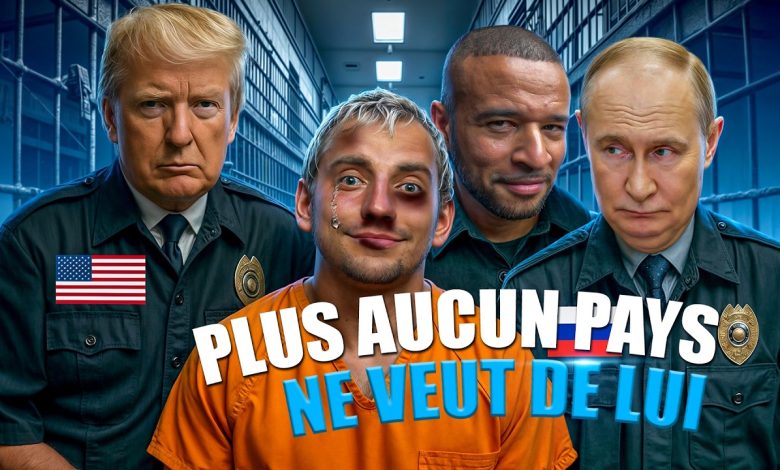
Russia and the United States reportedly both refused immediate repatriation, taking the position that he should answer for his actions in the Philippines. The United States could also revoke his green card. Russia reportedly publicly distanced itself from him and described him as a national embarrassment, according to the reported statements.
This raises a practical question: which country could he be sent to after serving any potential sentence? Secretary Juanito Victor Remulla stated that Philippine authorities did not know where to deport him if neither Russia nor the United States wished to receive him. The only stated certainty is that he would first have to serve his sentence should the courts convict him.
A Turning Point for Provocative Content Abroad
The Vitaly case is part of a broader context of reactions against creators who travel to countries considered welcoming or relatively tolerant in order to produce provocative content. Japan, South Korea and Thailand are among the destinations cited in connection with these practices.
The principle often relies on a simple mechanism: provoke a reaction, humiliate or harass strangers, record the episode, then turn the attention gained into views, followers, monetization and partnerships. But this approach disregards the dignity of those targeted, local rules and the potentially serious consequences of an offense committed abroad.
Philippine authorities appear determined to make this case a clear signal. The stated aim is not only to punish individual acts, but also to remind people that online fame confers no special rights. The hospitality of local residents, cultural tolerance or the viral nature of content do not provide immunity from the law.
FAQ
Why was Vitaly arrested in the Philippines?
His arrest is linked to several reported acts in public spaces, including theft or attempted theft, harassment, altercations with officers and alleged disturbances of public order.
What sentence could Vitaly face?
He reportedly faces five charges. The reported information mentions up to five years in prison for each count if he is convicted.
Can Vitaly return to the United States or Russia?
His administrative future remains uncertain. Both countries reportedly refused to take him back immediately, while his permanent resident status in the United States could be challenged.
 ">Moderateur
Follow on X
Send an email