Ariana Grande: Why Her Appearance Is Fueling Growing Concern
 ">Moderateur
Follow on X
Send an email
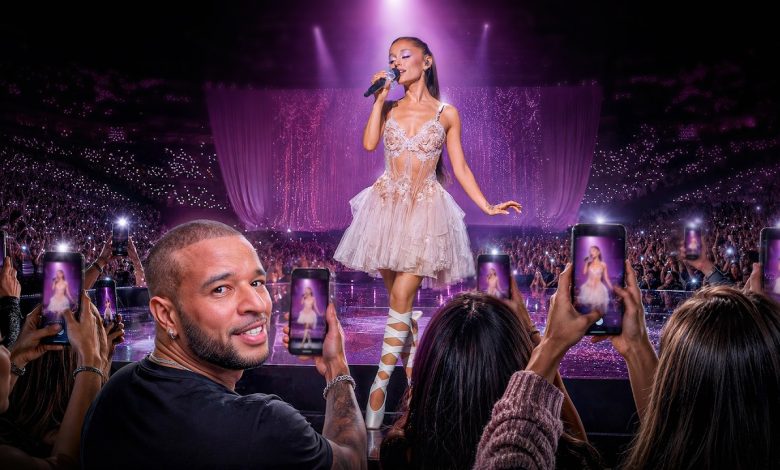
Ariana Grande’s appearance has been the subject of particularly intense discussion on social media. For several months, online users have said they perceive significant weight loss and have questioned her state of health. Others consider these comments intrusive or even harmful, as they may increase the pressure placed on someone who is already constantly scrutinised.
This controversy does not make it possible to draw any conclusion about the artist’s health. Only Ariana Grande and the professionals supporting her have reliable information on that subject. However, it highlights a broader question: how can people discuss a widely commented-on physical transformation without slipping into judgement, armchair diagnosis, or body shaming?
An artist whose every change is scrutinised
Ariana Grande has been known to the general public since her teenage years, notably through her role as Cat Valentine in the series Victorious, before establishing herself in music. This early exposure has permanently embedded her image in the collective imagination. Her character, portrayed as naïve and exuberant, also strongly shaped the way part of the public perceives her.
Her career then took on a global scale. At that level of fame, every public appearance, photograph, or performance becomes a subject of commentary. Her style, voice, relationships, appearance, and even changes in her accent have regularly been analysed, sometimes disproportionately.
Her body is not exempt from this scrutiny. Ariana Grande has always had a petite frame and a slim figure. But many online users believe her appearance has changed more noticeably in recent years, particularly since her involvement in the world of Wicked. This observation is, however, interpreted very differently depending on the person.
What Ariana Grande has said about her health
In response to comments about her physique, Ariana Grande has previously spoken out to stress that an earlier period of her life, often regarded by the public as her “normal” appearance, was, according to her, a time when she was not healthy. She has also asked for greater gentleness in discussions about other people’s bodies.
This reminder is essential: an image, a short clip, or a comparison between two photographs cannot be used to assess someone’s health. Lighting, makeup, posture, clothing, work schedule, and many other factors can alter visual perception.
Current reactions are therefore based largely on public impressions rather than verifiable medical information. Claiming that Ariana Grande has a specific disorder or is in danger would be speculation.
Concern heightened by stage footage
Clips of recent performances have reignited the discussion. Some comments focus less on the music or staging than on the singer’s appearance. Online users say they find her very thin or notice what they interpret as fatigue during her performances.
These observations remain subjective. An artistic performance is not a medical examination, and breathlessness perceived in an isolated sequence can have many explanations. Nevertheless, the debate is gaining momentum because some people who previously dismissed all concern now say they understand why the issue worries part of the public.
Reactions range from unconditional defence to sometimes excessive alarm. Some call for the artist to step away from the stage; others accuse those who are concerned of trying to fuel controversy. Yet between these two positions, there is a more measured approach: rejecting unfounded claims while acknowledging that public images can influence behaviour.
Legitimate concern and body shaming: a necessary boundary
How can a preventive approach be distinguished from hurtful criticism? The difference lies first in the language used and the goal being pursued. Mocking a body, commenting on its worth, or demanding that someone conform to an aesthetic standard is body shaming. It can further harm the person targeted and reinforce the collective fixation on their physique.
Conversely, discussing the dangers of glorifying extreme thinness, reminding people that no body type should be imitated uncritically, or encouraging those who are struggling to seek help are public health concerns. This conversation can exist without turning Ariana Grande into a living diagnosis or making her appearance into a spectacle.
The nuance is all the more important because celebrities should not be reduced to their bodies. Sincere concern does not give anyone the right to dissect every part of a person’s physique or share humiliating comparisons. It can, however, help question the beauty standards promoted by the industry and social media.
The influence of celebrities on thinness standards
Stars contribute, willingly or not, to the creation of trends. Their clothing, hairstyles, gestures, and silhouettes can be copied by millions of people. This effect is especially powerful among younger audiences, who may associate an admired appearance with the promise of success, beauty, or social acceptance.
The discussion is also taking place in a context in which visible weight loss among certain public figures fuels widespread commentary. The risk is not only that a celebrity will be judged; it is also that the idea of extreme thinness as an ideal to pursue may become normalised.
Trying to reproduce a star’s appearance can lead some people to adopt dangerous behaviours without medical supervision or appropriate support. Not everyone has access to the network, healthcare professionals, or resources that an international celebrity may have.
Moving beyond opposing camps
Online debates often push people to choose a side: either nothing should be said, or every image should be treated as proof of danger. This opposition obscures the complexity of the issue.
It is possible to respect Ariana Grande, take her own statements seriously, and reject armchair diagnoses. It is also possible to point out that body standards conveyed by popular culture have real effects on the public. These two ideas are not contradictory.
The most useful discussion, then, is not about determining from images what may be happening in the artist’s private life. It is about promoting a more cautious relationship with appearances: not idealising thinness, not humiliating bodies, not turning concern into rumour, and remembering that health is never reducible to a silhouette.
FAQ
Can it be known whether Ariana Grande is in danger based on her appearance?
No. Photographs, stage clips, or visual comparisons are not enough to establish a diagnosis or determine someone’s state of health.
Why does her appearance prompt so many reactions?
Ariana Grande has a global audience, and her image has been followed for many years. Any visible change is therefore amplified by social media and the attention paid to celebrities.
Is discussing the risks associated with extreme thinness necessarily body shaming?
No, provided that it does not attack or diagnose an individual. A preventive discussion can address the dangers of body standards and imitating risky behaviours while using respectful language.
 ">Moderateur
Follow on X
Send an email