Enough with Victim Heroes: What Our Choice of Heroic Figures Says About Our Values
 ">Moderateur
Follow on X
Send an email
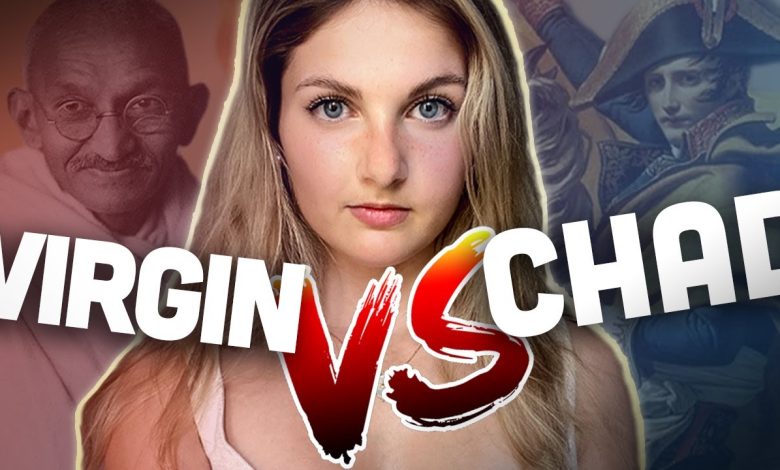
The heroes celebrated by a society are not chosen at random. They give concrete form to its values, its vision of courage, and the way it conceives of greatness. A hero may be admired for conquests, a sense of duty, endurance, sacrifice, or the ability to embody a cause. But these criteria do not produce the same human models.
A contemporary critical reading therefore contrasts two figures: the traditional hero, associated with action, risk, and power, and the “victim hero,” whose moral authority stems primarily from suffering endured, domination denounced, or an oppressed position. This contrast raises a broader question: what becomes of the very idea of heroism when vulnerability and victim status become central sources of legitimacy?
The Hero as a Mirror of Collective Values
Identifying one’s heroes often amounts to stating what one considers admirable. The hero is not merely a historical or fictional figure: they serve as a reference point. They indicate what a community hopes to pass on, emulate, or honour.
In a classical conception, a hero stands out through visible qualities: courage in the face of danger, acceptance of risk, ambition, a sense of honour, the ability to act amid uncertainty, and the pursuit of an aim greater than oneself. This figure also accepts a tragic dimension: political or military action offers no guarantee of permanence, success, or recognition.
Napoleon is invoked as an example of this type of hero. His image evokes the will to power, a taste for greatness, authority, and conquest. In this framework, heroism rests not on innocence or moral purity, but on the intensity of deliberate action and on the ability to shape history.
The Emergence of the Victim Hero
By contrast, the victim hero draws strength from suffering endured and injustice opposed. This figure belongs to an imagination in which the oppressed enjoy moral superiority over those portrayed as the dominant party, the oppressor, or the executioner. The balance of power can therefore shift onto the terrain of moral judgment.
This logic does not necessarily deny all political action. Rather, it places emphasis on the narrative of domination and redress. Those who succeed in appearing as the most exposed, humiliated, or persecuted party acquire a strong moral position. Their opponents then risk being disqualified not only for their actions, but for what they represent in the collective narrative.
This perspective views competition among victims as a major phenomenon in contemporary public life. Conflicts would no longer be played out solely around interests, programmes, or power, but also around each side’s ability to have its injury, exclusion, or grievance recognised.
Gandhi: Moral Nonviolence or Political Strategy?
Gandhi is commonly associated with nonviolence and the struggle for Indian independence. From this perspective, he is one of the world’s great figures of peaceful resistance. His image is often linked to peace, moral courage, and the strength of renouncing violence.
The interpretation offered here differs: it holds that nonviolence can also be understood as a political strategy. A statement attributed to Gandhi is highlighted: “I would far rather risk violence than risk the emasculation of a whole race.” Based on this quotation, nonviolence is presented not as absolute pacifism, but as a method suited to a particular balance of power and moral sensibility.
Under this interpretation, choosing nonviolence can place an opponent in a morally costly position: using force against people who refuse to respond with violence may provoke outrage and strengthen the legitimacy of their cause. Victim status then also becomes a political lever.
Such an analysis does not diminish Gandhi’s historical importance; rather, it invites readers not to reduce a political strategy to a one-dimensional image of sainthood. A leader can defend a nonviolent method while pursuing an objective of sovereignty, national liberation, and collective power.
Nelson Mandela and the Tensions Within the Heroic Narrative
Nelson Mandela is frequently associated with equality, reconciliation, and understanding among peoples. His international prestige rests largely on this image. Yet a critical reading points out that political journeys can rarely be reduced to a consensual message.
The text underlying this reflection notably claims that Mandela took part in organising more than 200 attacks and continued to coordinate ANC operations during his imprisonment. These elements are invoked to highlight the alleged gap between a pacified public image and a trajectory marked by political struggle, violence, and the South African conflict.
The point of the debate is not to pass a simplistic judgment on the fate of a historical figure, but to understand how heroic narratives are constructed. Collective memory may favour certain episodes, speeches, and images in order to turn an individual into a symbol. Nelson Mandela’s award of the Nobel Peace Prize is thus interpreted as the consecration of a figure who became compatible with the values of reconciliation and equality promoted internationally.
Why Heroes of Action Are More Divisive
Heroes of conquest, war, or authority do not command consensus. They remind us that history involves power relations, victories, defeats, and decisions that are sometimes irreversible. Their possible greatness does not exempt them from controversy; on the contrary, it makes them harder to fit into a simple moral framework.
The critique of the “new heroes” rests on the idea that a society primarily valuing suffering and weakness ultimately comes to distrust strength that is openly embraced. Figures of power then become suspect because they impose demanding standards: courage, discipline, the ability to withstand hardship, ambition, and responsibility.
From this perspective, replacing heroes of action with heroes defined essentially by their suffering would alter the hierarchy of values. Greatness would no longer be linked to what a person accomplishes, but to the place they occupy in a narrative of oppression and redress.
Recovering a Demanding Idea of Example
The question of heroes also concerns one’s personal relationship with effort. The figures people admire can provide an inner measure when doubt, fatigue, or discouragement arise. The example of First World War combatants, confronted with trenches, bombardments, and the deaths of their comrades, serves here as a point of comparison: in the face of such ordeals, ordinary difficulties can be put into perspective.
This reference does not call for reproducing the experiences of the past or glorifying war. It raises a simpler question: which examples help us remember that we can endure more than we think?
The debate between victim heroes and heroes of action is therefore not resolved by drawing up a definitive list of good and bad role models. It compels us to examine the virtues associated with heroism: compassion, resistance, dignity, boldness, sacrifice, power, reconciliation, or a sense of duty. Choosing one’s heroes also means choosing the qualities one wishes to see grow within a society.
FAQ on Victim Heroes
What is a victim hero?
The term refers to a heroic figure whose legitimacy rests primarily on suffering endured, oppression denounced, or the ability to represent a cause victimised by domination.
Why are heroes important in a society?
They embody values and offer models of behaviour. Their place in collective memory influences how a society defines courage, success, duty, or justice.
Is a peaceful hero necessarily a victim hero?
No. Nonviolence can be understood as a moral principle, a political strategy, or both at once. The notion of the victim hero refers more specifically to the centrality of victim status in the construction of heroic legitimacy.
 ">Moderateur
Follow on X
Send an email