Thaïs d’Escufon: Why Her Content Has Shifted Toward Male-Female Relationships
 ">Moderateur
Follow on X
Send an email
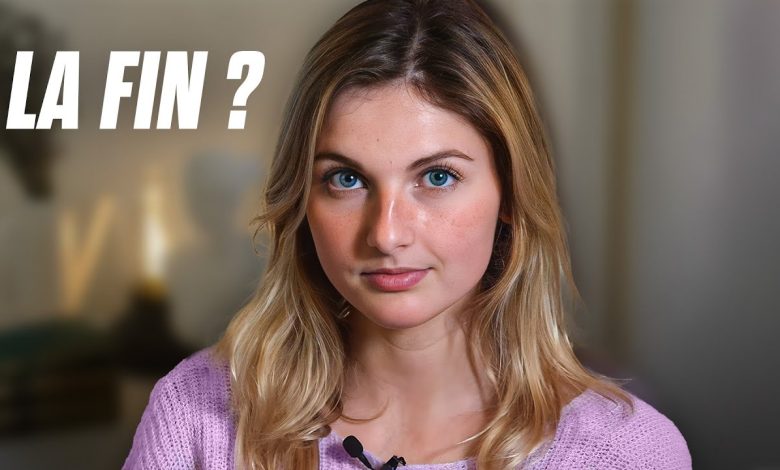
Thaïs d’Escufon explains the evolution of her preferred subjects as an ideological continuity rather than a break. After being primarily associated with identitarian activism, immigration, and security issues, she has increasingly focused her public positions on feminism, masculinity, femininity, emotional loneliness, and relations between men and women.
According to her, this shift stems from an observation: intimate and relational issues have political and civilizational significance. She says she wants to move beyond merely denouncing social phenomena in order to offer reflections on individual behaviour, the family, and relations between the sexes.
A background initially tied to identitarian activism
Thaïs d’Escufon dates the beginning of her political engagement to 2018, when she was studying at Toulouse-II Le Mirail University. She says she met members of Génération identitaire in Toulouse before joining the movement and campaigning with it for around three years.
She describes that period as formative both personally and politically. She says she found a collective of young activists, a culture of action, and an emphasis on self-improvement. In her account, activism enabled her to structure her convictions and confront the concrete consequences of political action, including legal proceedings and police custody.
She also mentions taking part in an action at Place de la République in Paris in June 2020, during a rally held by the Adama committee. This episode, which received extensive media coverage, helped publicly identify her as one of the figures of Génération identitaire.
The dissolution of Génération identitaire, decided in March 2021 by Interior Minister Gérald Darmanin, then marked a major turning point in her trajectory. Thaïs d’Escufon presents the decision as the end of an activist framework to which she was deeply attached. She nevertheless says she retained her convictions regarding identity, immigration, and European culture.
From activism to public commentary
Following the dissolution of the movement, she says she sought another way to continue her commitment. Her first public interventions then focused on traditional themes of the identitarian right: immigration, security, working-class suburbs, assimilation, and the place of women on the right.
She also supported Éric Zemmour during the 2022 presidential campaign. She describes this period as one of intense personal involvement, but also as a source of disappointment after the election result. In her view, the experience highlighted the limits of political discourse that does not sufficiently reach younger generations or remains too abstract in relation to their daily lives.
This reflection led her to seek other means of communication and persuasion. She believes that emotional difficulties, loneliness, tensions between men and women, and questions surrounding male and female roles are more immediate concerns for part of the public.
Discovering the psychology of male-female relationships
Thaïs d’Escufon links part of this evolution to reading L’Amour et la Guerre by Julien Rochedy. She explains that the book led her to take a more serious interest in evolutionary psychology, archetypes, and the differences she believes exist between male and female behaviour.
She also cites Guillaume Faye, particularly his book Sexe et Dévoiement, as a reference that reinforced her belief in a connection between collective identity, sexuality, demographics, and relations between the sexes. These references form part of a political outlook that is specific to her and that she explicitly embraces.
Her approach is to present the crisis in male-female relationships as an issue extending beyond the private sphere. She links declining relationship stability, isolation, relational frustrations, and the weakening of the family to a broader crisis in European society. These interpretations reflect her political and ideological positions.
A critique of feminism and certain male-oriented discourses
Thaïs d’Escufon says she does not define herself primarily as anti-feminist. She prefers to describe herself as “pro-family” or “pro-civilization.” Nevertheless, she believes that contemporary feminism contributes to intensifying opposition between the sexes and weakening lasting relationships.
She also criticizes discourses she associates with the “red pill,” MGTOW movements, or certain male influencers. Her main criticism is that she sees a logic of resentment in some of this content, in which women are portrayed as responsible for all the difficulties faced by men.
She presents her own approach as different: she says she wants to help men understand romantic relationships without trapping them in a posture of complaint. She argues that men’s difficulties must be taken seriously while maintaining that everyone must work on their personal situation. From this perspective, understanding female behaviour should not lead to devaluing women or fostering hostility between the sexes.
She directs a comparable message at women: she advocates the idea of a positive femininity, distinct both from the feminism she criticizes, from the promiscuity she describes as nihilistic, and from self-effacement. This conception rests on a differentiated view of men’s and women’s roles, a view that is debated in the public sphere.
The concept of “heroic masculinity” at the centre of her project
The central concept advanced by Thaïs d’Escufon is that of “heroic masculinity.” She does not reduce it to physical strength, social status, or seduction. Rather, she associates it with courage, self-assertion, discipline, determination, and putting one’s abilities at the service of a goal that goes beyond individual interest.
In her discourse, this masculinity should enable men to move beyond passivity, frustration, and isolation. She believes that restoring the value of these qualities could also encourage more balanced relations between the sexes and strengthen the family.
She specifies that this ambition would not concern men alone. In her view, rediscovering a structuring masculinity also requires an affirmed femininity and cooperation between the sexes. The stated objective is therefore not to sustain a gender war, but to move beyond it by redefining mutual expectations.
An editorial line presented as politics by other means
Thaïs d’Escufon rejects the idea that she has abandoned politics by speaking more frequently about male-female relationships. On the contrary, she argues that feminism, demographics, marriage, monogamy, emotional loneliness, and representations of masculinity are political subjects in their own right.
She therefore embraces a change in method: less focused on directly addressing identitarian themes, her approach seeks to begin with relational and psychological concerns before connecting them to her vision of society. She presents this strategy as an attempt to reach people who might not naturally identify with traditional political discourse.
This orientation remains inseparable from her identitarian convictions, which she says she maintains. Her position thus combines a critique of feminism, a defence of the family, the valorization of masculinity, and reflection on European identity. This framework, which she herself claims, explains the now prominent place given to relations between men and women in her public commentary.
FAQ
Why does Thaïs d’Escufon speak less about immigration?
She explains that she has not abandoned these subjects, but has chosen to address them indirectly through issues of family, demographics, identity, and relations between the sexes.
What does “heroic masculinity” mean according to Thaïs d’Escufon?
She uses the expression to describe a masculinity based on courage, responsibility, determination, and self-transcendence, rather than appearance alone or the pursuit of status.
What is her position on MGTOW and red pill movements?
She says she seeks to understand the difficulties faced by some men, but rejects discourses that encourage resentment toward women or an exclusively conflict-based view of relations between the sexes.
 ">Moderateur
Follow on X
Send an email