The Tupac Case: How Keefe D’s Statements Revived the Investigation
 ">Moderateur
Follow on X
Send an email
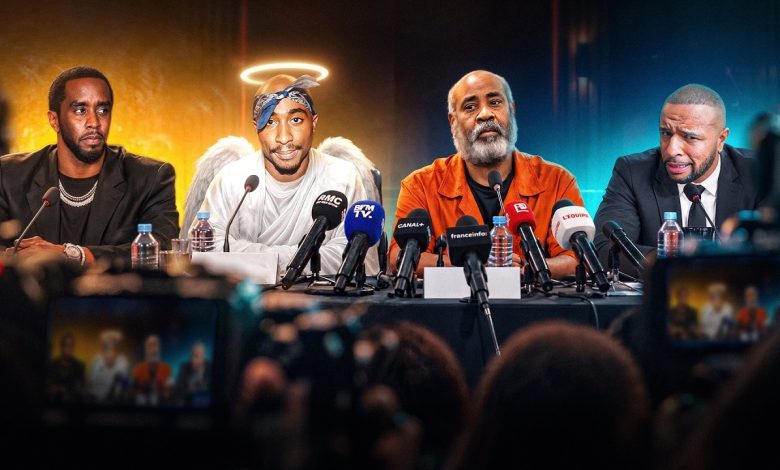
The death of Tupac Shakur, who was shot in Las Vegas in September 1996 and pronounced dead six days later at the age of 25, has long ranked among the most discussed criminal cases in rap history. With no physical evidence, usable witness testimony, or cooperation from certain people involved, the investigation remained stalled for decades.
The case nevertheless took a turn with public statements from Duane Davis, known as Keefe D. Described as Orlando Anderson’s uncle, he repeatedly gave his version of events. His remarks, shared in interviews and expanded upon in his book Compton Street Legend, placed his alleged role back at the center of the case.
Tupac Shakur’s path before Las Vegas
Born in New York in 1971, Tupac Shakur grew up in an environment shaped by his family’s political activism. His mother, Afeni Shakur, and his stepfather, Mutulu Shakur, were connected to the Black Panthers. Before his birth, his mother had notably been jailed in a conspiracy case against the U.S. government.
After spending time in Baltimore, Tupac moved to Oakland, California. He developed an early interest in the arts: theater, poetry, dance, and musical comedy were all part of his education. In Baltimore, he also met Jada Pinkett, who later became Jada Pinkett Smith.
In Oakland, despite difficult family circumstances, he continued writing and rapping. Meeting Leila Steinberg was an important step: she supported him and connected him with people around the group Digital Underground. Tupac then went on tour as a roadie and dancer before appearing on the track Same Song.
This first exposure allowed him to launch his solo career. His album 2Pacalypse Now, with its raw, political, and committed tone, quickly established a strong artistic identity. His profile then rose rapidly, while his lyrics and public positions earned him a major place in American hip-hop.
Growing tensions between the East Coast and West Coast
During his career, Tupac grew close to The Notorious B.I.G., known as Biggie, who was then associated with Sean Combs, also known as Puff Daddy or Diddy. That relationship deteriorated after Tupac was shot in a New York studio, where he was hit five times.
Tupac accused Biggie and Puff Daddy of being involved in, or at least aware of, the attack. Those accusations helped intensify the already publicized divide between artists associated with the East Coast and the West Coast. The track Hit ’Em Up became one of the best-known symbols of that period of conflict.
In the public discourse of the time, the tensions were no longer framed solely as musical rivalries. Media coverage, competing statements, and reported threats fueled an especially tense atmosphere around the two camps.
The night of September 7, 1996
On September 7, 1996, Tupac attended a Mike Tyson fight in Las Vegas. After the event, an altercation broke out in the lobby: Tupac and several members of his entourage attacked Orlando Anderson. The scene was captured by security cameras.
According to the account established around the investigation, Anderson had been identified as the person who had earlier assaulted a member of Tupac’s entourage and stolen a chain from him. After the altercation, Orlando Anderson declined medical treatment and did not file a complaint.
Later that evening, Tupac headed to a club where he was due to take part in a charity concert. He was in a car with Suge Knight, the head of Death Row Records. At a red light, a white Cadillac pulled up alongside them. Shots were then fired from the vehicle.
Suge Knight was injured, while Tupac was struck by four bullets, including two in the chest. Hospitalized in critical condition, he died six days later. No weapon was recovered, no witnesses were able to identify the shooters, and Suge Knight refused to cooperate, all of which immediately complicated the investigation.
Orlando Anderson, an early suspect without conclusive evidence
Orlando Anderson quickly became a major suspect because of the assault that had occurred just hours before the shooting. A retaliatory motive therefore appeared to be a plausible lead for investigators. Anderson denied any involvement, however, and no evidence made it possible to charge him.
He later died in a settling of scores, depriving the investigation of a central figure. For years, theories multiplied: some targeted Suge Knight, others mentioned a police officer named David Mack, while Biggie and Puff Daddy were regularly cited in media coverage because of the conflict between the two camps. None of these leads resulted in a judicial resolution at the time.
Keefe D and the cooperation agreement
In 2018, a unit tasked with reopening the investigation took an interest in Duane Davis, also known as Keefe D. Described as an important gang figure and Orlando Anderson’s uncle, he became a key figure in the theory that the lobby assault led to a desire for retaliation.
Keefe D had previously entered into a cooperation agreement with authorities in connection with a drug-trafficking case. The agreement allowed him to provide information without statements made in that specific context being used against him. He reportedly acknowledged involvement in the Tupac case at that time.
The distinction is essential: according to the account of the case, this agreement did not amount to general immunity. It protected statements made in the context of the cooperation, but not necessarily those later repeated in a book or to the media.
A public account that became central to the case
Over the years, Keefe D made numerous public statements. He discussed the shooting in several interviews and published Compton Street Legend in 2019. In it, he presents a detailed version of events: after Orlando Anderson was assaulted, four men allegedly got into a car to find Tupac.
In this account, Keefe D claims that Puff Daddy had promised a $1 million bounty to kill Tupac. He also claims that the rapper’s car was spotted on the streets of Las Vegas because of the attention from fans and photographers. Puff Daddy denied any involvement in the case, and Keefe D also said that he never received the payment he mentioned.
Keefe D identifies Orlando Anderson as the alleged shooter from the back seat of the vehicle. According to the account, the other three men who were allegedly in the Cadillac have all since died. This situation makes Davis’s public statements especially important to investigators.
From media confession to criminal proceedings
In September 2023, Keefe D was arrested for the murder of Tupac Shakur. His defense relied in particular on the agreement he had previously made with authorities. Investigators, however, focused on statements made outside that framework: passages from the book, interviews, and repeated public remarks.
Facing prosecution, Keefe D claimed that the material recounted in his book had been invented in order to sell it and make money. He also maintained that he had not written the book himself. That defense strategy nevertheless conflicts with the book’s claimed autobiographical nature and with the repetition of similar accounts in his public appearances.
The account states that a guilty verdict was delivered after three hours of deliberation, while sentencing was expected on October 13. Above all, the case illustrates the weight that public statements can carry when they are made outside a judicial cooperation agreement.
FAQ: The Tupac and Keefe D case
Why was Orlando Anderson suspected?
Orlando Anderson had been attacked by Tupac and his entourage just hours before the Las Vegas shooting. Investigators therefore considered retaliation as a possible motive, although they did not have enough evidence at the time to charge him.
What role does Keefe D say he played?
Keefe D has said that he was involved in the events surrounding the shooting. In his book and in interviews, he describes a vehicle carrying four men, including Orlando Anderson, whom he identifies as the alleged shooter.
Why would his agreement with authorities not have protected him?
The agreement in question protected statements made as part of a specific cooperation arrangement with authorities. Statements made publicly afterward, particularly in a book and interviews, could be considered separately.
 ">Moderateur
Follow on X
Send an email