How China Opens Doors Around the World Through Attention and Symbolism
 ">Moderateur
Follow on X
Send an email
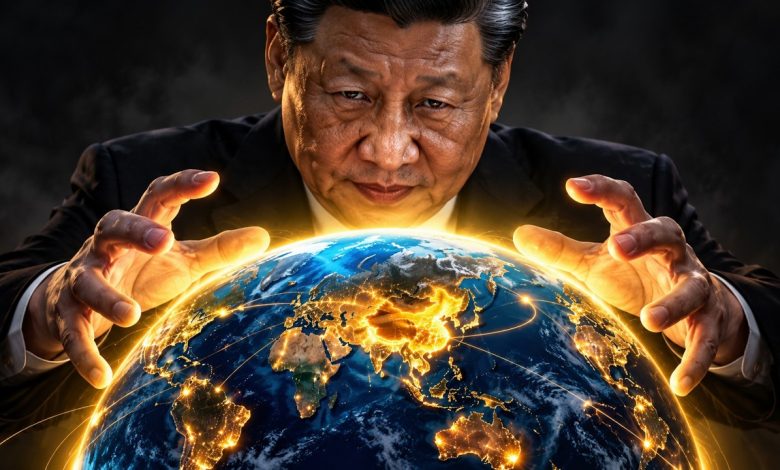
China’s power is often associated with its industrial weight, its exports and its capacity to trade on a large scale. This dimension is visible in many countries, from Dubai’s major specialist markets to shops and warehouses run by Chinese merchants in different parts of the world.
But international expansion does not depend solely on the ability to manufacture or sell. Establishing a lasting presence in a country, building relationships and gaining the openness of foreign counterparts also require work to build trust. From this perspective, the attention paid to the person across the table can become a particularly effective lever of influence.
A Global Presence That Goes Beyond Trade
Over the course of a few decades, China has become an essential trading power. Its presence is not limited to major agreements between states or global production chains: it is also noticeable in highly local commercial settings.
In Dubai, Dragon Mart is described as a vast marketplace bringing together Chinese sellers and products. Elsewhere, Chinese shops can be found in more remote areas, while some warehouse districts display signs and information in Chinese.
This ability to be present in very different environments raises a simple question: how can the conditions for cooperation be created when the other side has no obligation, in principle, to open its doors? One answer lies less in power than in the quality of the relationship that is built.
The Gift as a Relationship-Building Tool
A gift does not have only material value. In a personal, professional or diplomatic relationship, it can express a desire to create a connection. Yet not all gifts serve the same purpose.
A present can highlight the person offering it: their country, culture, expertise or image. It may surprise and even amuse, without necessarily deeply affecting the person receiving it. Another gift, by contrast, can be designed around the recipient’s history, tastes or personal references. In that case, its implicit message is different: “We took the time to get to know you.”
The difference is decisive. The first gift primarily speaks about the giver. The second truly addresses the recipient.
The Example of Gifts Presented to Barack Obama in Belgium
During Barack Obama’s visit to Belgium in 2014, he received, among other gifts, a Stromae album and a giant speculoos biscuit bearing his likeness. These presents could highlight Belgian references: a renowned artist and a national speciality.
They nevertheless illustrated a logic centred on the host’s identity. The album and the biscuit mainly conveyed the idea: “This is what we produce; this is what represents us.” It can be a friendly gesture, but it does not guarantee the creation of a particular emotional bond with the recipient.
The cost, originality or spectacular nature of a gift is therefore not enough to make it a relationship-building tool. What matters is evidence of an effort to understand.
The Portrait of Zhao Zilong Given to Park Geun-hye
Xi Jinping referred to an example that illustrates this approach. Chinese painter Fan Zeng created a portrait of Zhao Zilong for Park Geun-hye, then president of South Korea.
Zhao Zilong is a Chinese historical figure from the Three Kingdoms period. He is described as a general associated with courage, loyalty and martial skill. One famous story depicts him saving his ruler’s son while surrounded by enemy forces.
The choice of this work was not random. Park Geun-hye had written in her autobiography that Zhao Zilong would probably have been her first love, had she had one. The gift was therefore based on personal information that Chinese teams had read and remembered.
Its strength lay not only in the value of a painting or the artist’s reputation. The portrait signalled precise attention to the recipient’s personality. It turned a protocol gesture into a mark of respect.
Understanding the Other Party Before Trying to Persuade
This principle applies far beyond diplomacy. In professional relationships, many approaches fail because they first seek to impress or sell. They present an offer, a product or a message without demonstrating that the other party’s real needs have been examined.
Conversely, an approach that identifies a company’s difficulties, priorities and areas for improvement creates greater credibility. It does not merely promise a solution: it shows the work done to understand the problem.
The same mechanism can be seen in everyday exchanges. A generic greeting message may be appreciated, but it often remains interchangeable. A message that refers to a project, a challenge overcome or an ambition known to the recipient has a different effect. It makes the attention tangible.
A meaningful gift can be an object, a letter, a work of art or a gesture. Its value lies less in its price than in the time, energy and knowledge of the other person that it reveals.
The Essential Limit: Avoiding Manipulation
Targeted attention can also prompt legitimate caution. When someone receives a highly personalised present, they may wonder whether the intention is sincere or intended to secure an immediate advantage.
This distinction is fundamental. Manipulation consists of identifying another person’s emotional mechanisms solely to serve one’s own interests. In that case, attention becomes a tool of control. Sincerity, by contrast, requires taking the other party’s interests into account and seeking cooperation that can be useful to them.
Even the most carefully considered gift cannot replace consistency. If the gesture conveys attentiveness but the message that follows becomes aggressive, standardised or purely commercial, trust may disappear. Attention must continue through actions, proposals and the way negotiations are conducted.
Why This Method Can Open Doors
In international relations as in business, trust often comes before collaboration. Showing that one knows one’s counterpart, respects their path and has invested time in understanding their expectations makes dialogue easier.
This mechanism guarantees neither an agreement nor an alliance. It does not replace economic interests, power relations or political differences. But it can create a more favourable climate for exchange by reducing the distance between two parties.
The example of the portrait of Zhao Zilong thus illustrates a form of relationship-based diplomacy: using a symbol selected not to impress the greatest number of people, but to speak directly to the person receiving it. Influence then rests not only on economic power, but also on the ability to give importance to the other person.
FAQ
Why can a personalised gift have a greater impact?
Because it shows that the giver has spent time understanding the recipient. Its value is therefore as much emotional as material.
What role does gift-giving play in diplomacy?
It can be used to express respect, recall a shared reference and establish a climate of trust. However, it does not replace the political or economic interests that shape relations between states.
How can sincere attention be distinguished from manipulation?
Sincerity is measured over time and through consistency between the gesture, the message and the actions that follow. A sincere approach seeks a balanced relationship, whereas manipulation primarily pursues a one-sided gain.
 ">Moderateur
Follow on X
Send an email