Best Off
Best of all
-

The Myth of the “Identity Pincer”: A Critique of Bringing the Extremes Together
The “identity pincer” refers to the idea that identitarian and decolonial movements jointly fuel France’s divisions. Its critics consider this comparison misleading, seeing it as an artificial equivalence between discourses, objectives, and relationships to the nation that they regard as opposed.
Read More » -

Suburbs: Nine Claims to Examine in Public Debate
The debate over French suburbs is marked by opposing narratives about immigration, public investment, inequality and violence. Here is how to examine nine frequently made claims without confusing opinion, lived experience and evidence.
Read More » -

Why Thaïs d’Escufon Supported Éric Zemmour in 2022
During the 2022 presidential election, Thaïs d’Escufon supported Éric Zemmour in the first round. She highlighted his immigration platform, his positions on French identity, women’s safety and his ambition to build an identitarian right distinct from the National Rally.
Read More » -

Three Ineffective Arguments in Right-Wing Political Debate
An analysis of the limits of three common rhetorical reflexes in right-wing political debates: highlighting supposed contradictions, resorting to whataboutism, and accusing opponents of failing to uphold their own principles.
Read More » -

Why Thaïs d’Escufon Does Not Believe in Assimilation
Thaïs d’Escufon presents assimilation as a model that is no longer suited to current circumstances. Her reasoning rests on four points: the scale of migration flows, differences between civilizations, the existence of separate communities, and a definition of French identity that, in her view, extends beyond culture alone.
Read More » -

Patriotic Immigrants: What Role Do They Play in Political Debate?
The notion of “patriotic immigrants” refers to figures from immigrant backgrounds who defend conservative, sovereigntist or republican positions. Their place in public debate fuels controversy over anti-racism, identity, political alliances and the autonomy of individual commitments.
Read More » -
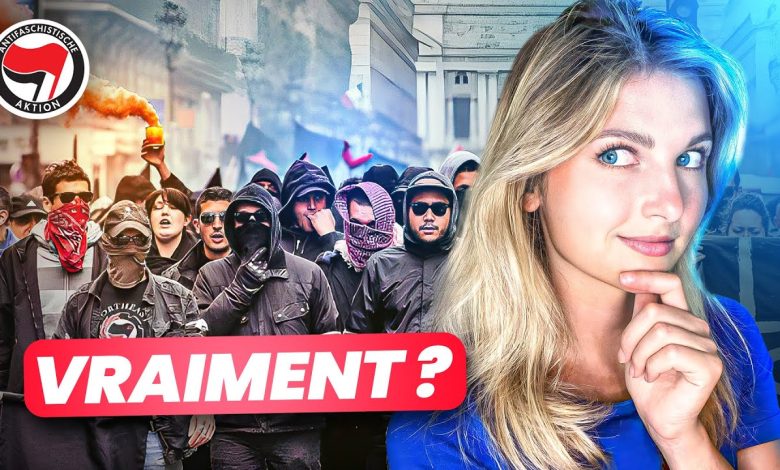
Why the Phrase “Antifa Are the Real Fascists” Confuses Political Debate
The phrase “Antifa are the real fascists” is often a response to acts of political violence. Yet it rests on historically questionable comparisons and risks shifting the debate away from the actions, responsibilities, and ideologies involved.
Read More » -

Was the Left Really “Less Progressive” in the Past?
The idea that the French left was once more moderate, more working-class, or more critical of immigration fuels recurring political nostalgia. This view contrasts certain historical figures with today’s left. Yet it raises a central question: was there an ideological break, or a consistent evolution in the left’s priorities and political coalitions?
Read More » -

Creating a Meaningful Connection Without Making Someone Dependent
Deep questions, consistency, attentiveness, and calm presence can nurture a relationship. What matters most, however, is respecting the other person’s emotional autonomy rather than cultivating longing, obsession, or sleeplessness.
Read More » -

Fascism: Why Historical Definitions Matter in Political Debate
The term “fascism” is frequently used as a political accusation. A historical approach, however, calls for distinguishing its specific features—party-state, political religion, militias, and radical anti-egalitarianism—from more widely shared practices such as censorship or violence.
Read More »