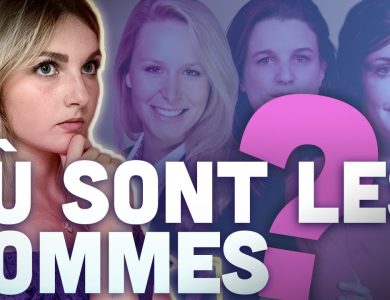
European Patriarchy: A “Third Way” Between Feminism and Pseudo-Patriarchy
 ">Moderateur
Follow on X
Send an email

“European patriarchy” is presented as a third way in debates over relations between men and women. This proposal rejects both egalitarian feminism, described as an ideology that erases sexual differences, and what it calls “pseudo-patriarchy” originating in non-European cultures. Its stated aim is to restore more stable relations between the sexes while preserving a European cultural identity.
This approach rests on a central idea: men and women are not interchangeable and would not, on average, have the same aspirations or dispositions. Therefore, a social model based on their strict similarity would meet neither men’s nor women’s needs.
Rejecting an Alliance Against Feminism
The starting point is a critique of an argument found in certain masculinist or identitarian discourses: supporting immigrant populations, particularly Muslims, on the grounds that they would uphold a more traditional view of masculinity and relations between the sexes.
This strategy is described as a “pact with the devil.” According to this view, looking to other cultures for a way to fight feminism would mean accepting demographic, cultural, and religious change deemed contrary to Europeans’ interests. The criticism therefore concerns not only feminism, but also the notion that a gender model external to European culture could serve as a remedy.
The argument put forward is that it would not be enough to replace one system considered harmful with another. A society could not regain lasting balance by abandoning its own cultural references, family habits, and historical conception of relations between men and women.
Why Challenge Equality Conceived as Interchangeability?
The criticism targets less the abstract idea of equality in dignity than the conception according to which the two sexes should occupy the same functions, pursue the same goals, and live according to the same norms. The contemporary model is accused of imposing generalized competition: in work, emotional life, family life, and the pursuit of status.
From this perspective, the promise of individual freedom would also carry a cost. For women, it would mean competition in every area of life. For men, it would be accompanied by the loss of a clear role, recognized responsibility, and a sense of usefulness.
The argument draws in particular on the work of Betsey Stevenson and Justin Wolfers, authors of a 2009 study titled The Paradox of Declining Female Happiness. The study is invoked to support the claim that women’s reported sense of happiness declined from the 1970s onward despite advances in equality. The figure cited is a 33% increase in the share of women reporting that they were not happy between 1972 and 2022, according to US happiness surveys.
The interpretation offered attributes this development to competitive pressure and the disappearance of a protective family framework. This is a political reading of the data: the study’s authors are presented as offering a different explanation, namely that equality remains incomplete.
The Male Need for Usefulness and Brotherhood
The concept of European patriarchy places significant importance on men’s social usefulness. The example of veterans is raised through observations by American journalist Sebastian Junger, who followed soldiers involved in several conflicts, including Afghanistan.
According to the analysis cited, some veterans do not miss the violence of war or the suffering it causes, but rather the sense of brotherhood, necessity, and solidarity they experienced there. Returning to civilian life can sometimes be difficult because it removes the feeling of being indispensable to a group, a mission, or a country.
This idea informs a particular conception of masculinity: a man would not be defined primarily by domination, but by concrete responsibility toward his own. He would need to be able to protect, serve, decide, and contribute to something greater than himself.
Henri and Marilyn: Two Complementary Figures
The proposal is embodied in two figures associated with the Annecy attack. Henri, a young man present during the assault, is cited as an example of “heroic masculinity”: unarmed, he reportedly intervened in an attempt to protect the children who were attacked. His actions are interpreted as the manifestation of a protective instinct in the face of danger.
Marilyn, a childcare assistant who was present at the scene, is cited for having protected the children in her care before assisting the injured. Her conduct is associated with what is called the “maternal instinct.”
Within this framework, Henri and Marilyn do not represent two individuals confined to rigid roles, but two complementary functions: defending against threat and protecting the most vulnerable. European patriarchy is thus summarized through the combination of protective virility and embraced maternal femininity.
A Patriarch Presented as Leader and Protector
The family model being defended assigns the father a guiding role. He is described as the head of the family, without being equated with a tyrant. This authority would be legitimate only in exchange for duties: providing material resources, giving the family direction, making difficult decisions, and being fully involved in the lives of his children.
According to this conception, the woman must be heard and her interests must be taken into account. However, the father would retain the final say when a decision is necessary. The argument advanced is that, in difficult times, a family needs someone capable of embodying stability and assuming final responsibility.
This vision refers to the traditional figure of the “good father of the family.” It is illustrated by references to Odysseus, prepared to endure long trials to return to his family and kingdom, and to Thomas Wayne, Bruce Wayne’s father in some versions of the Batman universe: a doctor, entrepreneur, philanthropist, and father who sacrifices himself to protect his own.
A Proposal Linked to Cultural Transmission
European patriarchy is not limited to the organization of the household. It is presented as a project of civilizational continuity. According to this thesis, a society that sustains a war between the sexes, no longer values the family, or no longer gives men and women a positive role weakens its capacity to pass on its culture and form families.
The defense of traditional sex roles is therefore linked to preserving a European heritage. The model claims a masculinity and femininity regarded as belonging to this history, rather than adopting foreign reference points. France is specifically invoked through the idea of a tradition of courtly love, presented as a sufficient cultural resource for thinking about relations between the sexes.
This third way is thus defined by a double rejection: it opposes the erasure of differences between men and women while also rejecting forms of patriarchy described as authoritarian or imported. Its horizon is that of a structured family, in which male authority is accompanied by strong obligations and femininity, especially motherhood, is valued as an essential social function.
FAQ
What is European patriarchy?
European patriarchy is a political and cultural concept that advocates distinct and complementary roles for men and women. It links male authority to protection, family responsibility, and the transmission of a European heritage.
How does this idea differ from feminism?
This conception challenges the idea that men and women are interchangeable. It holds that a social model based on equality understood as identical roles would overlook their average differences and respective needs.
Why is it called a “third way”?
The expression refers to a position that rejects both egalitarian feminism and non-European patriarchal models described as pseudo-patriarchal. It proposes restoring traditional family roles while adapting them to the present.
 ">Moderateur
Follow on X
Send an email